
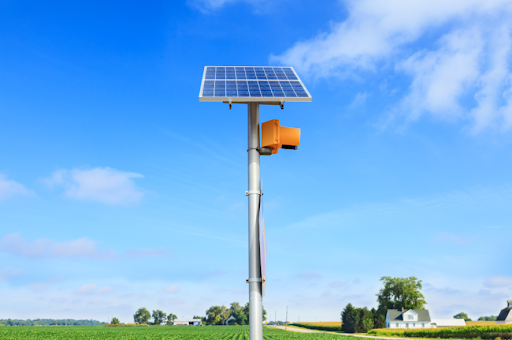
Solar lighting is an excellent option for many businesses. It lowers operating costs, reduces your company’s carbon footprint, and may even qualify you for government rebates. Before you install a commercial solar lighting system, you should ask several important questions. These questions help you choose the right lighting setup and understand what to expect over time. Orca Solar Lighting note that as a commercial enterprise, lighting is an important aspect that is required for you to do business daily, so you want to make sure that you get it right. The installation of commercial solar lighting can be costly in the beginning but over time it does pay for itself in a big way.
1. Where Will the Lighting Be Installed?
Start by identifying how you plan to use the area. Will it be a parking lot? A walkway? Decorative lighting for aesthetics? Once you know the purpose, consider the materials in the space concrete, epoxy, asphalt, or another surface. Each material reflects light differently, which affects how well the lighting performs.
Next, assess any obstructions such as trees, structures, or signage that may block sunlight from reaching the solar panels. The dimensions of the area also matter, as larger spaces typically require more powerful lighting or additional fixtures. Your geographic location further influences performance because sunlight hours vary by region.
Other factors that affect installation location include:
-
Your region’s average daily sunlight hours, which determine the size of the solar module you need.
-
Large obstructions that block sunlight and reduce charging efficiency.
-
The amount of lighting required for the space and the corresponding solar configuration.
-
How different surface materials reflect or absorb light.
Once you understand these factors, you can plan the right lighting configuration. You can also dim or turn off lights when they are not needed to conserve energy.
2. Where Are the Likely Failure Points?
Commercial solar lighting systems usually have three main failure points:
-
Solar panels not receiving enough sunlight to charge fully.
-
Lighting output that is too low for the area being illuminated.
-
Issues in the operational profile, such as incorrect programming or defects.
Mechanical issues can also occur, so it helps to know how the contractor will handle maintenance and repairs.
3. How Long Do You Need the Lighting to Operate?
You can run commercial solar lighting from dusk until dawn if required. You can also dim the lights during non-peak hours to reduce energy usage. The lighting schedule is called the operating profile, and it determines when lights turn on, dim, or switch off.
If your business does not operate 24/7, turning lights down or off at night reduces light pollution and signals to customers that you’re closed. In regions with strong seasonal sunlight variation, such as northern areas, operating schedules may change throughout the year.
Different sections of your lighting system may also require different operating profiles to maximize efficiency.
4. Do You Need an Experienced Contractor?
Many contractors install solar lighting as part of their services, but it’s best to choose one who specializes in commercial solar lighting. Ask to review their portfolio, request customer testimonials, and speak with past clients. Important questions include:
-
How long did the installation take?
-
What type of project was it?
-
Are the clients satisfied with the results?
An experienced contractor ensures proper installation, long-term reliability, and optimal performance.
5. What Colour Temperature Do You Want?
Colour temperature affects the fixture’s power output and should be included in your project cost planning. Modern cities often prefer warmer colour temperatures because they are gentler on the environment and human health. Selecting the right colour temperature improves both aesthetics and functionality.
Once you commit to installing commercial solar lighting, you unlock long-term benefits. Solar lighting lowers utility costs, reduces your company’s environmental impact, and appeals to customers who value sustainability. Businesses that use heavy lighting see especially large savings over time. Solar solutions also reduce your dependence on electrical companies and help you better manage operational expenses.