
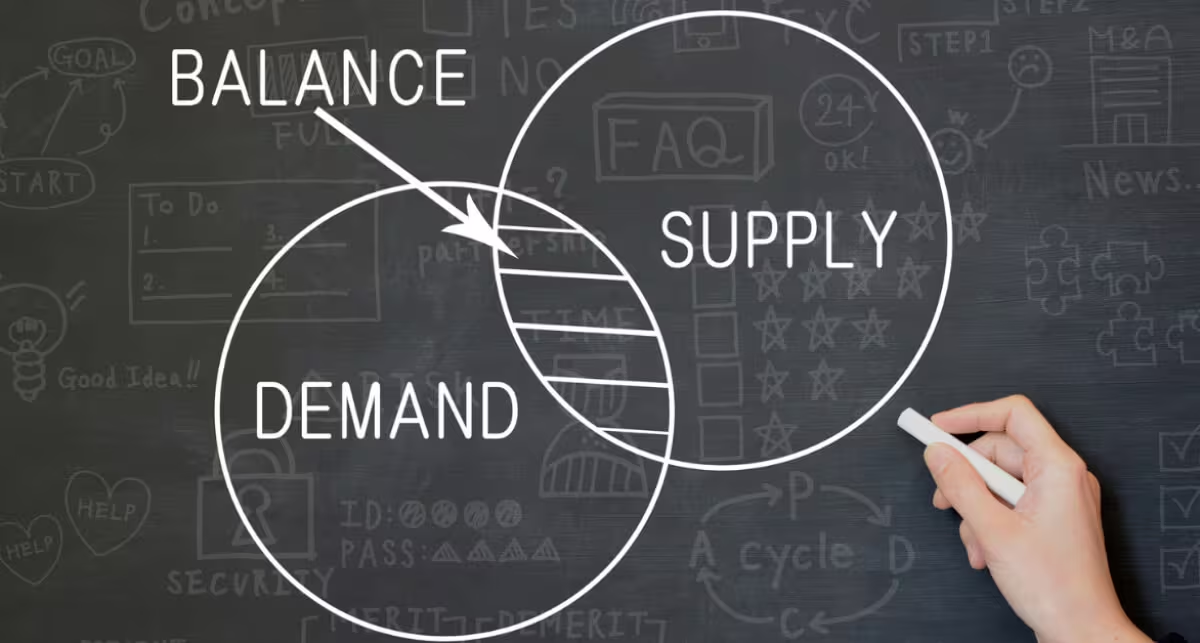
Supply and demand are the foundation of every market system. They influence prices, production, consumer choices, and the overall direction of an economy. While many people try to determine whether demand or supply is more important, the truth is that both forces work together. Their interaction shapes how markets function and how businesses respond to changing conditions.
To understand their importance, we must look at how supply and demand operate, how they influence each other, and how they help maintain balance in a market economy.
Understanding Supply and Demand
Supply refers to the total quantity of a good or service that producers are willing to offer at a specific price. When prices rise, producers have an incentive to supply more because they can earn higher profits. When prices fall, they tend to supply less.
Demand, on the other hand, reflects how much consumers want to buy at a particular price. When prices decrease, buyers usually want more of a product. When prices increase, buyers tend to reduce consumption.
These two forces may seem simple, but together they drive the economy. They influence not only how much is bought and sold, but also how businesses plan for production, investment, and long-term decision-making.
How Supply and Demand Shape Market Prices
One of the most important functions of supply and demand is determining the price of goods and services. Prices are not set randomly. They adjust based on consumer behavior and producer decisions.
For example:
-
If consumers start buying a product in large quantities, the available supply shrinks.
-
As the supply drops, the product becomes more valuable, and prices rise.
-
Higher prices motivate producers to increase production to meet the growing demand.
Conversely:
-
If supply grows faster than demand, the market will have more goods than consumers want.
-
When supply exceeds demand, prices fall because sellers compete to attract buyers.
In both situations, the market naturally moves toward a point where supply and demand become equal. This point is known as the equilibrium price.
Equilibrium: The Balance of the Market
At equilibrium, the amount suppliers want to produce matches the amount consumers want to buy. This creates balance in the market.
Equilibrium ensures:
-
No shortages — consumers can purchase what they need.
-
No surpluses — businesses do not produce more than they can sell.
-
Stable prices — buyers and sellers agree on a fair price.
Economists and businesses analyze equilibrium to make important decisions. For example, companies may use supply and demand data to choose production levels, determine pricing strategies, or plan future investments.
A healthy economy relies on this balance. When supply and demand remain aligned, markets operate smoothly, jobs remain stable, and consumers have access to what they need.
How Consumer Behavior Influences Demand
Consumer behavior plays a major role in shaping demand. People’s preferences, income levels, trends, and cultural influences all impact what they choose to buy.
Businesses closely study these patterns so they can adjust their products and production levels. They use market research, surveys, and analytics to understand:
-
What consumers want today
-
What they might want in the future
-
How much they are willing to pay
If consumers suddenly show interest in a new product, companies increase production to meet the demand. If interest drops, production decreases.
Because demand is constantly changing, it keeps the economy dynamic. Businesses must stay alert to shifts in demand to stay competitive.
How Producers Respond to Supply Conditions
Just as consumer behavior drives demand, producer decisions shape supply. Producers consider:
-
Cost of raw materials
-
Labor availability
-
Technology
-
Market prices
-
Profit expectations
When prices rise, producers have a strong motivation to supply more. When prices fall, they may reduce production to avoid losses.
This responsiveness helps the market adjust quickly to consumer needs. Producers ensure that goods remain available, and consumers influence what producers make through their purchasing choices.
Why Both Supply and Demand Matter
Some argue that demand drives the economy because businesses exist to serve consumer needs. Without buyers, producers would have no reason to supply goods.
Others believe supply is more important because businesses create jobs, produce goods, and stimulate economic growth.
The reality is that neither force can function alone. Supply responds to demand, and demand responds to supply. Their interaction maintains economic stability.
A strong economy requires:
-
Consumers who are willing and able to buy
-
Producers who can supply quality goods at reasonable prices
-
A balance between the two
When this balance breaks for example, during shortages, inflation, or supply chain disruptions the economy becomes unstable.
Learning Economics Made Simple
Understanding supply and demand is one of the first steps to learning economics. Many online platforms, including Udemy, offer beginner-friendly courses that explain economic concepts clearly. These courses cover topics like microeconomics, macroeconomics, market behavior, and how supply and demand shape the world around us. With flexible learning options and multiple languages, anyone can begin exploring economics with confidence.
Conclusion
Supply and demand are the core forces that shape markets. They determine prices, influence production, guide consumer behavior, and keep the economy balanced. Rather than being more important than the other, both forces are equally essential.
Together, they help create a stable, efficient, and dynamic economy where businesses can grow and consumers can make informed choices.